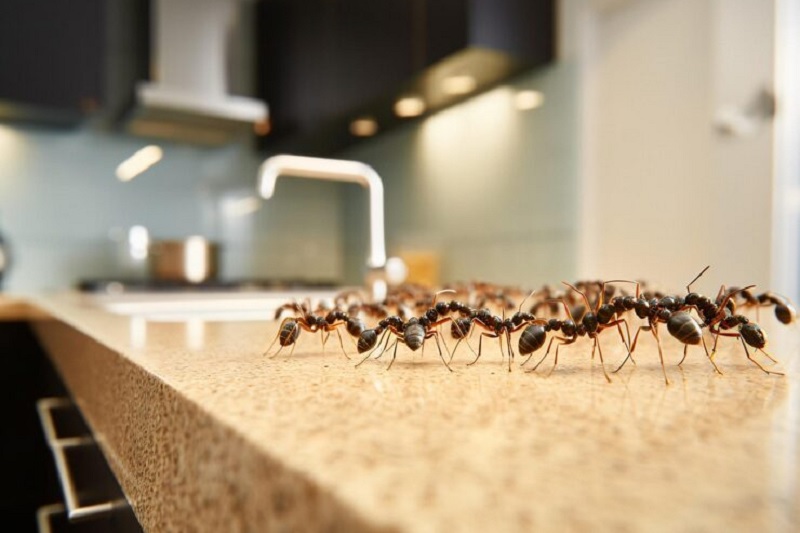
Ants showing up in your house are super common in the USA. When the weather gets hot, rainy, or cold, ants start looking for food, water, and a safe place to stay — and your home can become the perfect spot. Sometimes you only see a couple of ants on the counter, but there could actually be a whole ant colony hiding nearby.
This guide breaks everything down in a simple way and answers questions like:
- Why are ants suddenly in my house?
- Are ants actually harmful or just annoying?
- How do you get rid of ants for good?
- What really works to stop them from coming back?
- When should you call pest control?
Why do ants come into your home?
Ants usually don’t just show up for no reason. They come inside because they found something they need — food, water, or a cozy place to hide. If your home gives them easy access to those things, they can settle in pretty fast.
At first, you might only notice a few ants here and there, which doesn’t seem like a big deal. But if you ignore them, more and more can show up, and before you know it, you’re dealing with a full-on ant problem.
1. Searching for Food
The smell of open food in the home quickly attracts ants. Sweets and small food crumbs are especially attractive.
Sometimes, even a seemingly clean kitchen can attract ants if there is some sugar or food residue lying around. The most common examples are Sugar, honey, juice, bread, pet food and spilled food crumbs.
If the kitchen is not clean, ants can quickly arrive.
2. Water and Moisture
Ants need not only food but also water. Therefore, moist areas in the home are ideal for them. In many areas of the USA, humidity and pipe leakage are a major cause of ant infestations.
Ants are most commonly found in these places:
- Under the sink
- Bathroom
- Near pipe leaks
- Basements
- Around water heaters
3. Weather Change
Ant activity changes with changing weather. As the outside temperature rises or falls, they begin to search for new habitats. It’s common to see more ants inside homes during the summer and rainy seasons.
In summer, ants come out to search for food.
In the rain or cold, they seek shelter inside the home.
4. Easy Entry
Ants can enter the home through very small holes. Sometimes, homeowners don’t even realize where they are entering. If there are cracks or gaps in the home, ants can easily find their way inside.
Common Entry Points for ants in the house:
- Gaps under doors
- Window cracks
- Cracks in walls
- Empty spaces around pipes
Types of Common Ants Found in Homes in the USA
Different types of ants are found in the USA. Each ant’s behavior and damage can vary.
Some ants simply search for food, while others can also damage the structure of the home.
1. Odorous House Ants
These are one of the most common ants in homes in the USA. They are most commonly seen in kitchens and pantry areas.
They are uniquely identified by their foul odor when crushed.
- Small, black or brown in color
- Smells when crushed
- Most commonly found in kitchens
2. Carpenter Ants
These are large, strong ants that build their nests in wood. Over time, they can damage the wood in the home.
If carpenter ants are frequently seen in your home, it’s important to take immediate action.
- Large black ants
- Make nests in wood
- Can cause damage to the home
3. Pavement Ants
These are often found around sidewalks, driveways, and concrete cracks. They also enter the home in search of food.
Their infestations are commonly seen in kitchens and basements.
- Around driveways and sidewalks
- They enter the home in search of food
4. Fire Ants
Fire ants are known for their painful bites. They are more common in the southern states of the USA.
Their bites can cause burning and swelling.
- Bites are burning
- More common in the southern states of the USA
Do ants cause home damage?
Many people think ants are just a minor nuisance, but some types can cause serious damage.
If the infestation persists for a long time, both hygiene and property can be affected.
The Danger of Carpenter Ants
Carpenter ants tunnel into wood. Over time, this can weaken the structure of the house. If they are not stopped quickly, repair costs can increase.
They can hollow out wood, which can:
- Weaken walls
- Damage floors
- Increase repair costs
Contaminating Food
Ants travel through many dirty areas. Therefore, when they reach food, the risk of contamination increases. Maintaining kitchen hygiene is very important. Ants travel through dirty areas to reach food.
Allergies and Bites
Some ants can bite humans. Sensitive people may experience a more severe reaction. Fire ants may cause more burning and pain. Ant bites can cause some people to experience:
- Itching
- Swelling
- Allergies
Where do ants come from in the house?
Most ants come from colonies outside. They reach the house in search of food and water. Once they find a path, other ants follow the same trail. Ants often come from colonies outside.
Their common routes:
- Backyard
- Garden
- From trees
- From cracks in walls
- From the garage
They create a pheromone trail that guides other ants along the same path.
How to Get Rid of Ants? (Step-by-Step Guide)
If you only kill visible ants, the problem may recur. The correct approach is to target the entire colony. The steps below can help control ants for the long term.
Step 1: Identify the Ant Trail
Before you begin addressing the problem, it’s important to understand where the ants are coming from. This will help you reach their colony. Carefully observe their movement.
Note:
- Where are they coming from?
- What are they going to?
Identifying their trail is crucial.
Step 2: Remove Food
Ants will keep returning if there’s a food source in the house. Therefore, cleaning is the most important step. Even small crumbs and spills can attract ants.
Do these things immediately:
- Keep the kitchen clean
- Keep food containers closed
- Clean up crumbs immediately
- Don’t leave dishes overnight
- Don’t leave pet food open
Step 3: Eliminate water and moisture
Moisture control can significantly reduce ant activity. It’s especially important to pay attention to bathroom and basement areas. Leaks can increase long-term infestations.
- Fix pipe leaks
- Keep sinks dry
- Maintain proper bathroom ventilation
- Use a dehumidifier in the basement
Step 4: Seal Entry Points
If entry points remain open, ants will continue to enter the house. Therefore, sealing cracks and gaps is essential. This is an important part of long-term prevention.
Use these things:
- Silicone caulk
- Door sweeps
- Weather stripping
Seal cracks in walls and windows.
Step 5: Use Ant Removal Treatment
Many homeowners prefer to try natural remedies first. These can help with small infestations. However, larger infestations may require additional treatment. Therefore, to permanently eliminate ants and keep them out of your home, you should use effective products such as ant sprays or ant bait traps. If the situation is truly severe, calling in a professional would be an excellent idea.